ScoutHalo
Building ScoutHalo.
How an idea sitting in my Notes turned into the company I'm building today.
01 · October 2025
It started with a note.
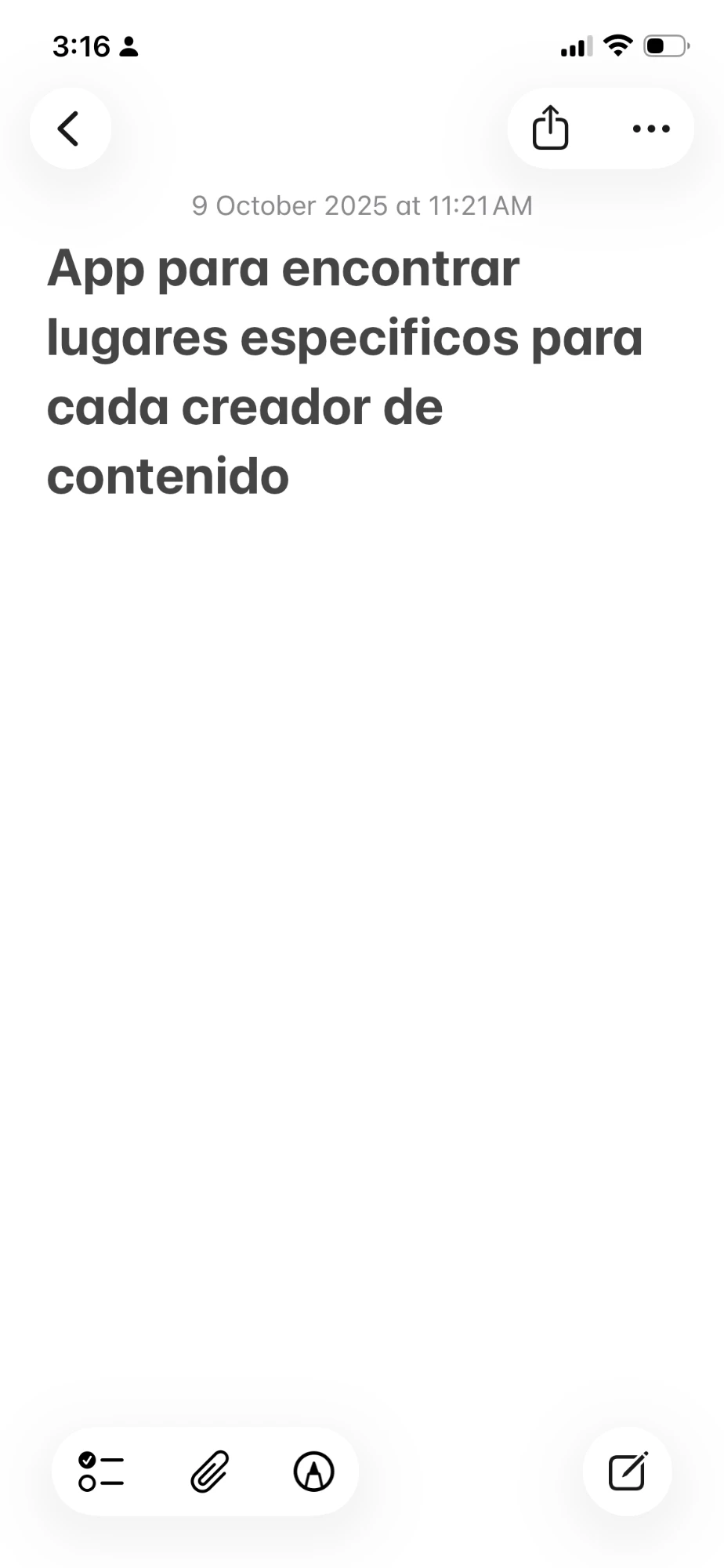
In October 2025, I wrote down an idea: an app for finding specific places for different kinds of creators. It was one of those random ideas you capture before you forget it. Then I left it there.
That summer — Uruguay's summer of 2025–26 — I was working at a friend's pub. When the season ended, I wasn't entirely sure what I was going to do next.
I started spending every day working with AI and learning what I could build with it. A few weeks later, I went back to that note and decided to give the idea a shot.
It began with a landing page, some early experiments, and eventually the first version of what would become ScoutHalo.
02 · March 2026
I started small.
The idea eventually became something I wanted to test.
I'm not a software engineer. I had some basic coding experience, and AI gave me a way to start building it myself. The first version was called ScoutNYC. The plan was simple: start with one city, build a useful collection of shoot locations, then expand to Los Angeles, Miami, and beyond.
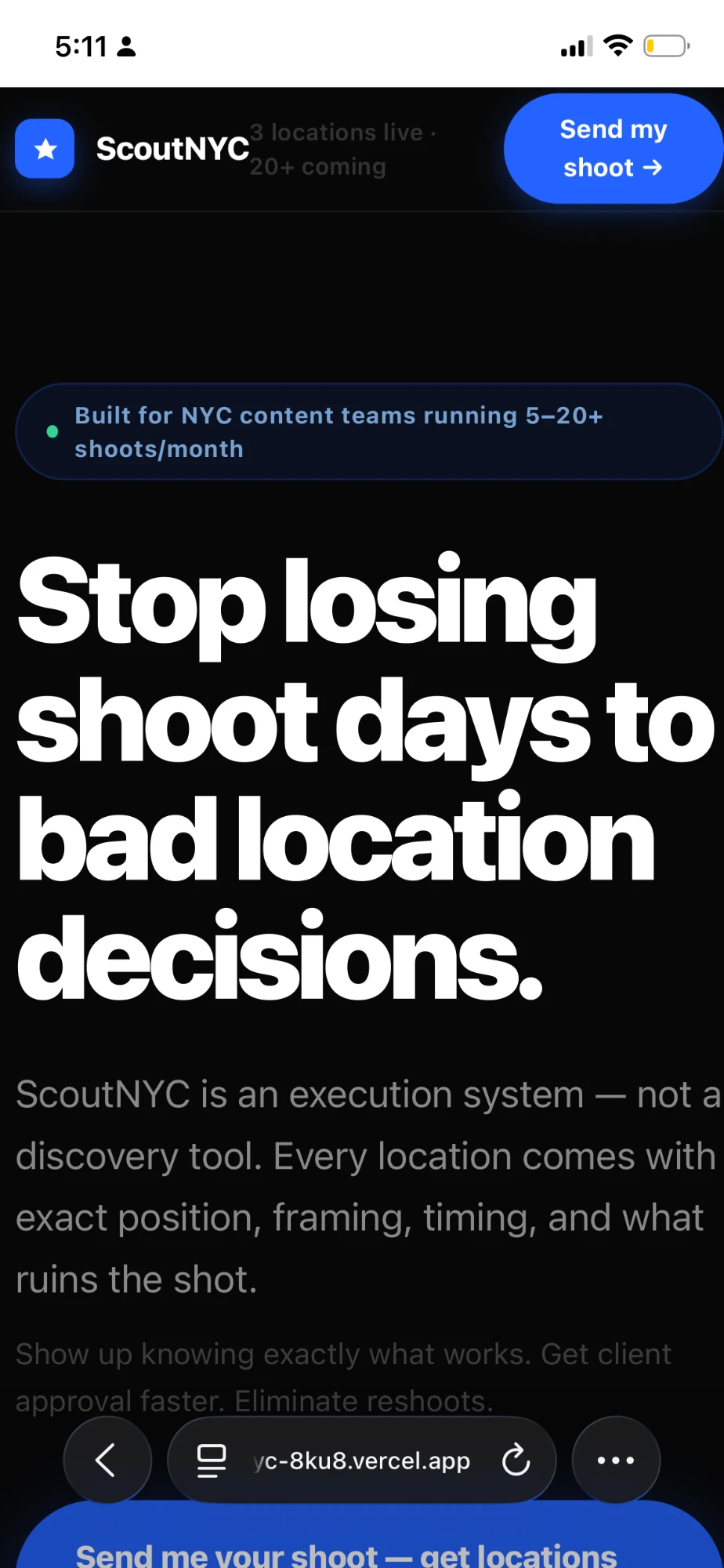
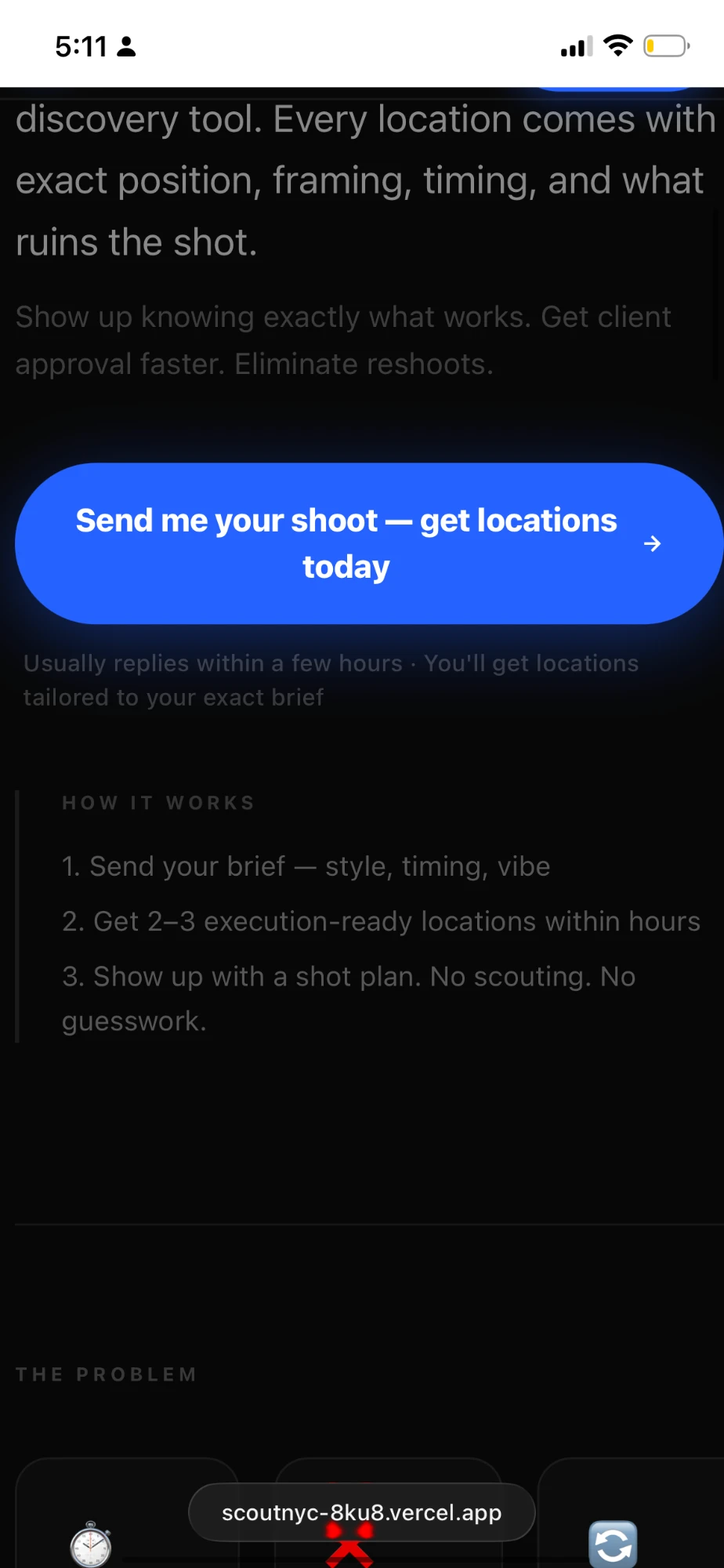
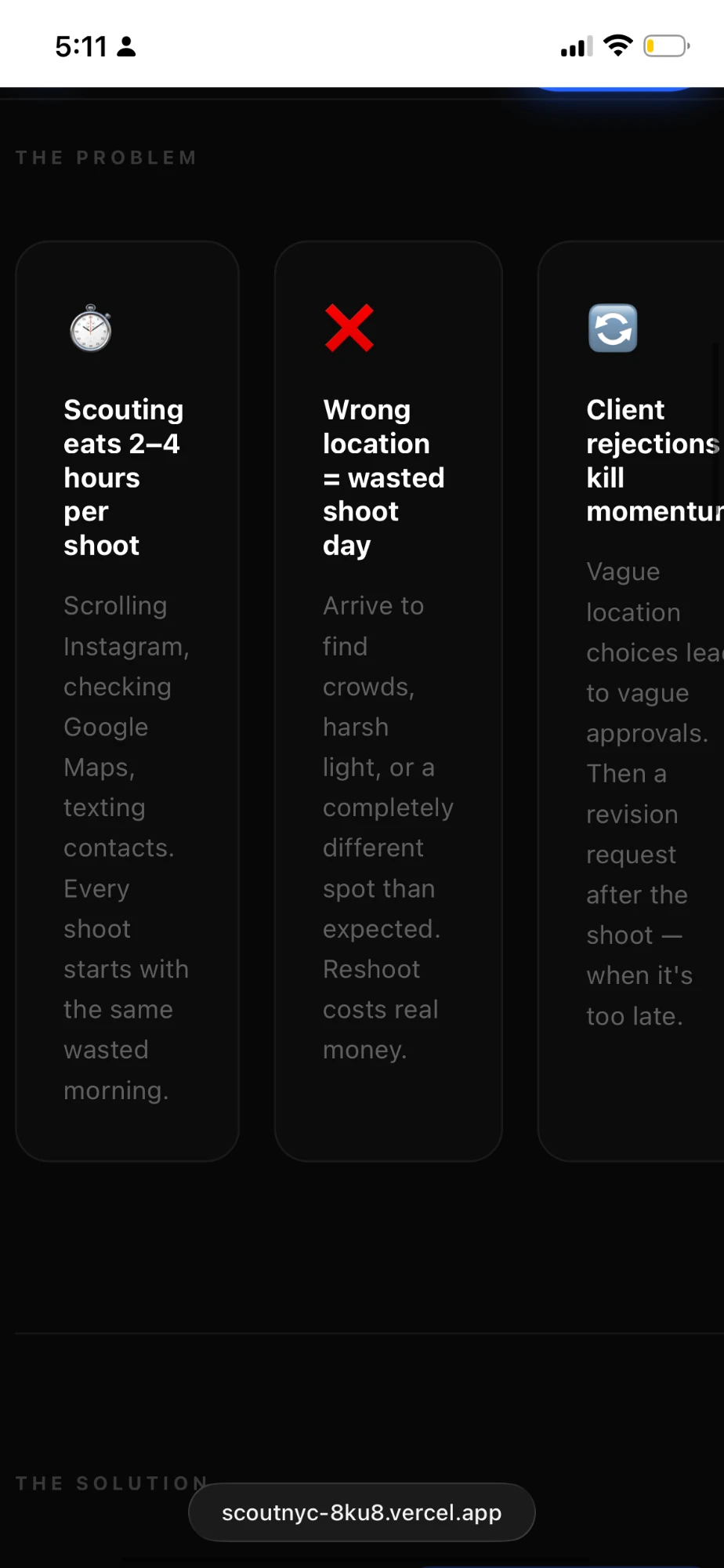
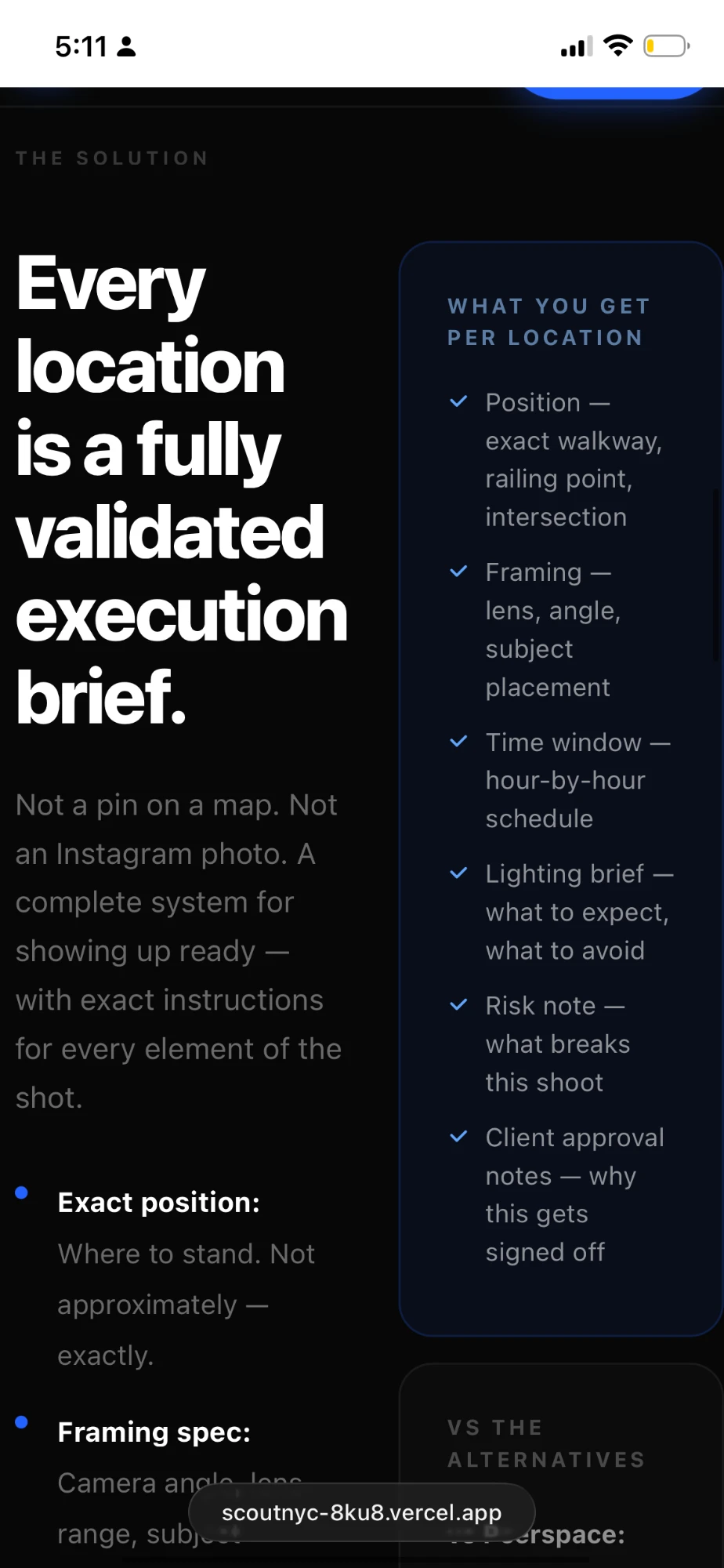
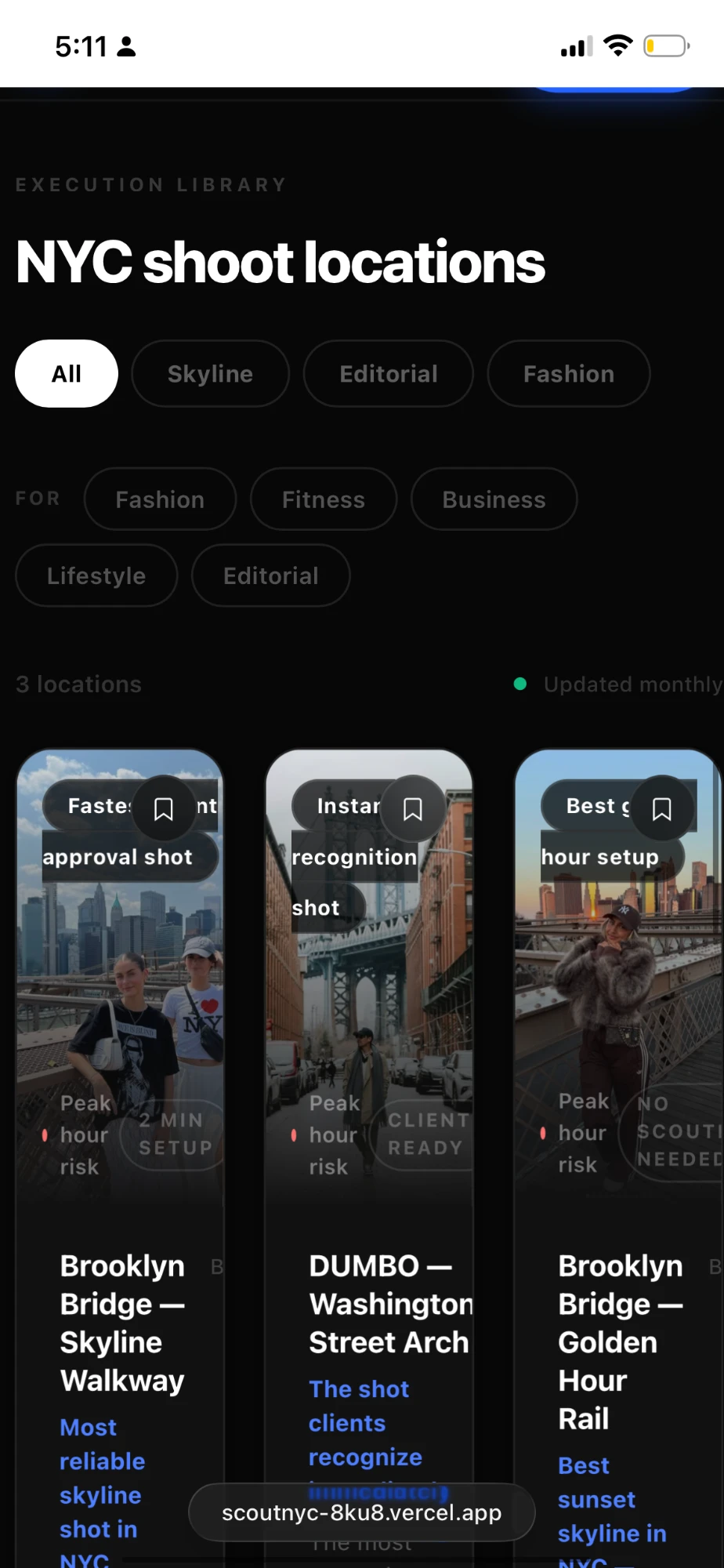
I built the first website and started adding locations manually. Each one needed the information I thought a creator would need to actually use it — where to shoot, how to frame it, when to go, and what could go wrong.
It worked well enough to prove the concept to myself.
But it also exposed the problem with the way I was building it: I was the database.
Every new location required me to find it, research it, structure the information, and upload it myself. Getting from a handful of locations in New York to thousands around the world wasn't going to happen that way.
At the time I also needed to make money and had other projects competing for my attention, so I put it aside.
03 · Jun–Aug 2026
Then I went all in.
In May 2026, I renamed ScoutNYC to ScoutHalo. Around the same time, I found a better way to build it.
Instead of manually building a database of places, I started using AI to understand what people were looking for, search for real locations, and evaluate how well those places matched their needs.
The problem that had made the first version impossible to scale started to look solvable. I realized I could build the product differently, and this time I decided to go all in.
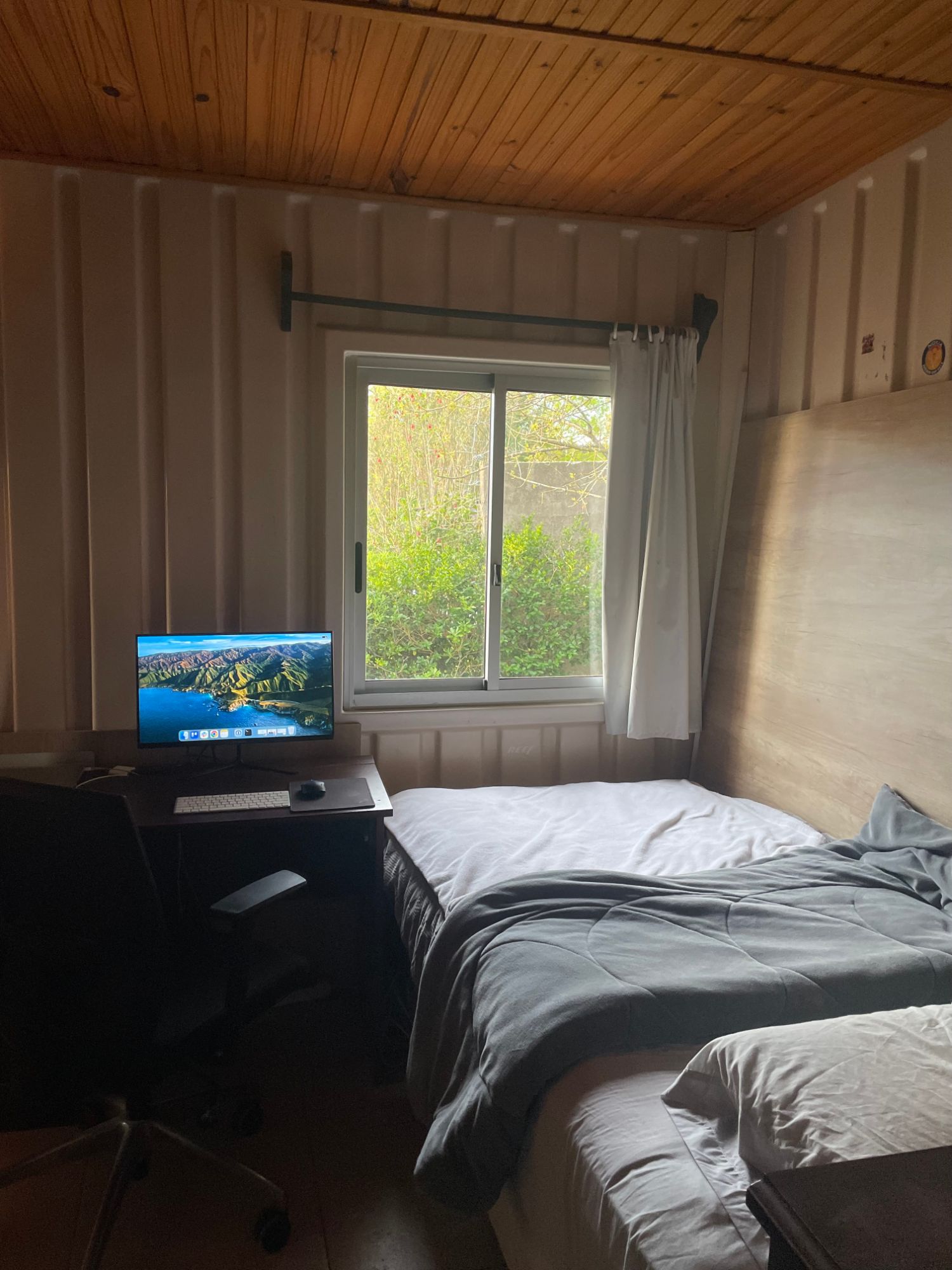
I spent most of that winter in Uruguay in one small room, with a bed next to my desk and a computer. For about three months, most days started when I woke up and ended when I went to sleep.
I was learning as I built. Most of ScoutHalo's code was written by AI: I built it by directing Claude Code and ChatGPT, and some days I had as many as four Claude Code agents working in parallel on different parts of the product.
My job was everything around the code. Deciding what ScoutHalo should be and who it was for. Breaking the work into pieces, writing the instructions, testing what came back, and deciding what was good enough to ship and what had to be redone. The product, and every decision behind it, is mine.
I wasn't working a job during that period. My family made it possible for me to take that risk. They supported me emotionally and financially, helping cover my basic living expenses and the tools I needed to keep building.
That support gave me something incredibly valuable: time. I used it to turn the rough idea I'd written in Notes into the first real version of ScoutHalo, and it's why I could make the decision to work on it full-time, which I still do.
04 · September 2026
Then it became a company.
On September 9, 2026, ScoutHalo, Inc. was incorporated in Delaware, in the United States.
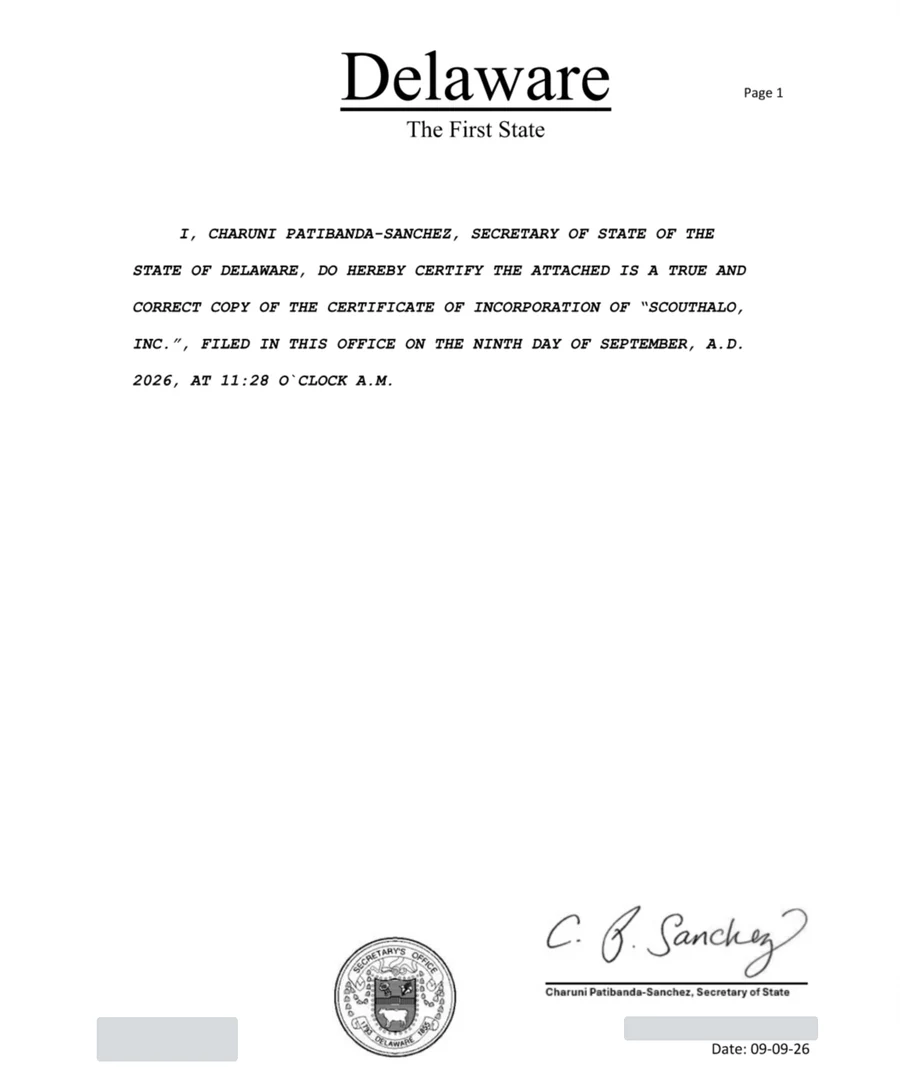
A small step on paper, but it made the commitment formal.
Two days later, I joined a DataCamp webinar on becoming an AI agent operator, talking about what I'd learned building ScoutHalo. It was my first time speaking in public. More about the webinar.
05 · Today
Live, and early.
What started as a sentence in my Notes became ScoutNYC, and eventually ScoutHalo.
ScoutHalo is live. Anyone can sign up and search for free, and a Pro plan adds more searches and tools for production work, and payments are working.
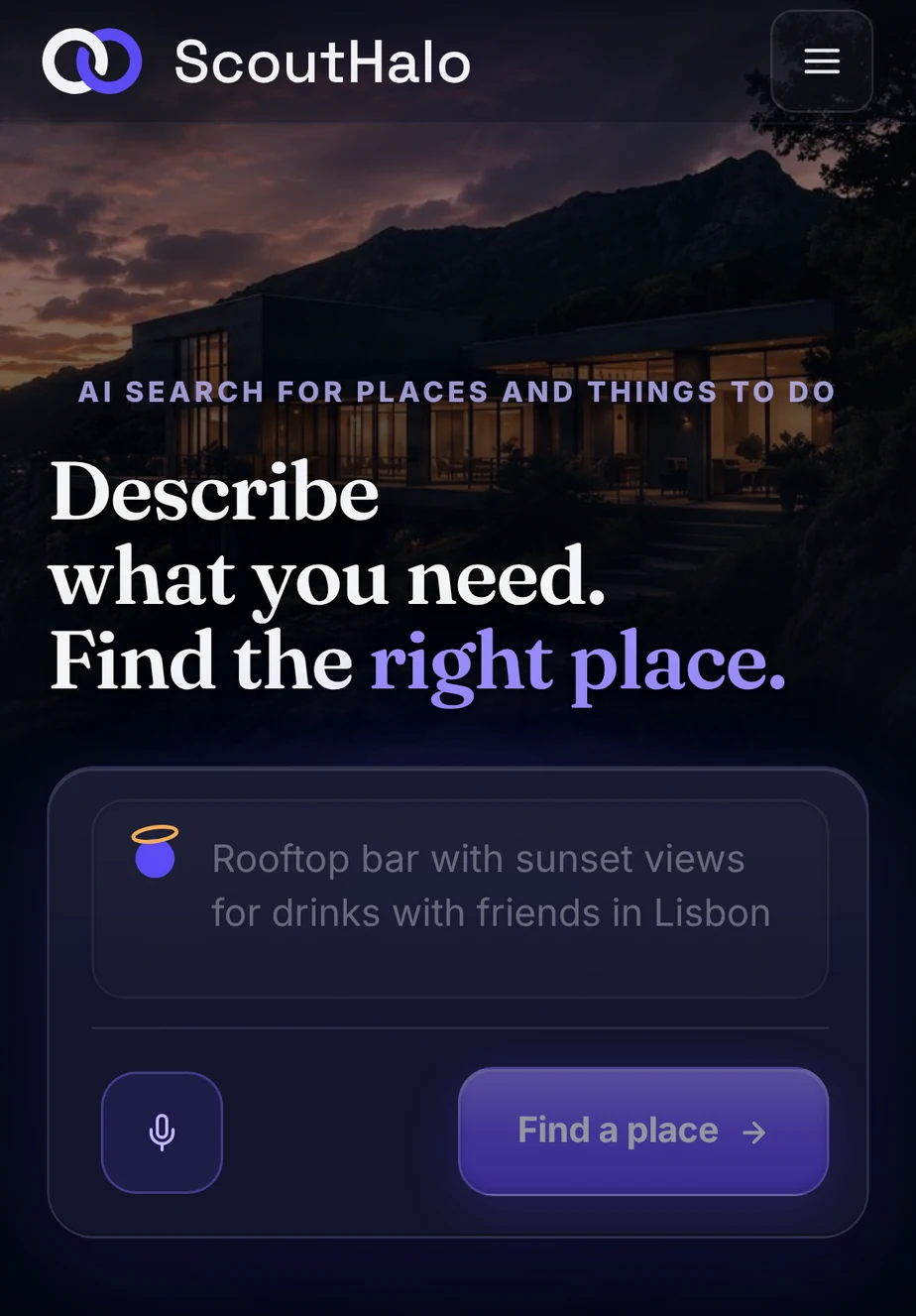
You describe what you need in a sentence, or start from a photo. ScoutHalo finds real places, explains why each one fits and what to confirm before you go, and helps you save, compare, and decide — whether it's a dinner, a trip, a place to work, a venue, or an experience.
Production scouting, where ScoutNYC began, is still one of those uses, and it's where most of the Pro tools are.
It's also early. A small number of people use it, and no one is paying yet.
A product that works isn't the same as a product people need. Closing that gap is the work now: putting ScoutHalo in front of the right people, learning from how they use it, and finding out where the demand is real.
06 · Next
Where it's going.
Maps tell you where places are. Reviews tell you what other people thought. Neither tells you whether a place fits what you actually need. That gap is what ScoutHalo is built around.
The ambition is much bigger than the product as it stands. I want it to become a global platform for discovering places: the first thing people reach for when they need to find somewhere real, anywhere in the world, and trust that it fits.
I know how far that is from where ScoutHalo is today. Getting there means doing the next steps well: earning the first customers, raising the money to move faster, and building a founding team of people who can own big parts of it.
This is still the beginning.